Can Pressure Washing Damage Paving or Stone?
By Elite Paving & Roofing Ltd, run by director Jerry Connors
Short answer: yes, it easily can. Point a narrow high-pressure lance too close to soft Indian sandstone, weathered mortar pointing, or block paving and you will pit the stone, blow out the joints, or strip the sand that holds your driveway together. Used properly with a rotary surface cleaner, controlled pressure, and the right pre-treatment, jet washing cleans paving safely without chewing it up.
What Goes Wrong When Paving Is Blasted Too Hard
We regularly get called out to driveways and patios across Kent after a weekend DIY clean or a rushed job with an industrial lance has left the surface worse than before. Most of the damage comes down to one thing: trying to strip stubborn dirt and black lichen using sheer bar pressure instead of the right equipment and cleaning solution.
1. Pitting and Flaking on Soft Sandstone
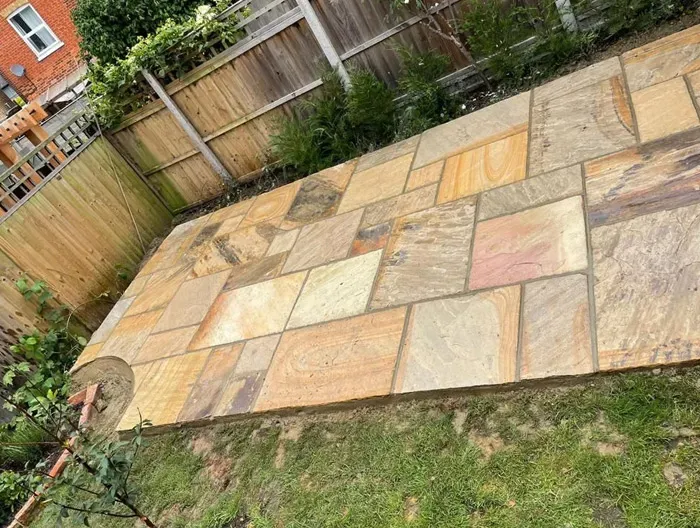
Natural Indian sandstone and limestone are sedimentary rocks made of compressed layers. Hit them at point-blank range with a pencil nozzle or turbo spinner and the water jet cuts into the softer grains, leaving permanent zebra stripes, rough pits, and flaking edges. Once the top skin is scarred, winter frost gets into those pits and speeds up delamination.
2. Blowing Out Mortar Pointing
Older sand-and-cement or lime pointing between garden slabs rarely survives a direct blast from a high-pressure wand. Even modern resin pointing can tear out if it is thin or weathered. Once the pointing is blown out, rainwater drains straight beneath the slabs, washing away the bedding mortar until slabs start to rock and crack.
3. Stripping Kiln-Dried Sand from Block Paving
Jet washing always washes out the top layer of jointing sand between paving blocks—that part is unavoidable if you want to remove deep moss and weeds. The damage happens when a driveway is left un-sanded afterwards, or when someone holds a lance right down in the joint and washes away the sharp bedding sand underneath the blocks too.
4. Scarring Tarmac or Resin-Bound Drives
Tarmac softens in warm weather and easily gouges under high pressure. Resin-bound stone drives can also lose loose aggregate if hit with excessive heat or a sharp concentrated jet. Both need gentle, wide-angle rinsing backed up by an outdoor biocide wash rather than brute force.
Watch Out for Black Lichen Spots
Those small black or white circular spots on sandstone patios are lichen roots embedded into the stone pores. Cranking up a pressure washer to blast them off is the single fastest way to ruin natural stone. They should be lifted chemically with a proper outdoor treatment, not chiselled out with water pressure.
How Different Paving Surfaces Handle Pressure Washing
Not every surface on your property should be cleaned at the same pressure or with the same nozzles. Here is how we approach the main driveway and patio materials we work on.
Concrete Block Paving
Medium-High PressureConcrete pavers are tough enough for rotary surface cleaning to clear moss and tyre grime. However, cleaning removes the joint sand, so re-sanding with kiln-dried silica sand once dry is essential to keep the blocks locked tight.
Indian Sandstone & Limestone
Low-Medium PressureNeeds gentle, even pressure across the slab face while keeping away from weakened mortar joints. Stubborn black spot lichen and deep algae stains should be pre-treated with a biocide or sodium hypochlorite wash so the dirt releases without gouging the stone.
Porcelain Patio Slabs
Medium PressureVitrified porcelain is dense and non-porous, so the slab face itself will not pit. Even so, heavy point-blank lancing can still chip thin slab corners or damage the grout joints, so a flat rotary head or wide 40-degree fan nozzle is still the safest option.
Resin-Bound & Tarmac
Low Pressure OnlyBoth surfaces should only be cleaned with cold water at controlled low pressure and a wide fan spray. We let an algicide pre-treatment break down moss and green slime first, then rinse gently from a safe distance so aggregate and binder stay intact.
Safe Rotary-Cleaning Methods & What Happens on the Day
A domestic pressure washer wand shoots a tiny, erratic jet that leaves tiger stripes on paving and sprays dirty water over walls, doors, and windows. When we carry out our professional driveway and patio cleaning service, we use commercial flat-surface rotary cleaners alongside controlled pre-treatments.
Prep & Property Protection
We move pots and garden furniture, check for loose slabs or crumbling mortar, and pre-wet delicate borders. Gullies and channel drains are checked before we start so dirty wash water doesn't back up towards air bricks or thresholds.
Rotary Surface Cleaning
A rotary cleaner houses spinning twin nozzles under a heavy circular hood. Because the nozzles stay at a fixed height and overlap smoothly, pressure is spread evenly across the paving with zero striping and almost no splashback onto brickwork or windows.
Post-Treatment & Tidy Wash-Down
Where black lichen or deep algae remains on sandstone, we apply a targeted treatment rather than over-pressurising the stone. Afterwards, all mud and moss slurry is swept up and cleared away, drains are flushed, and fences, walls, and doors are rinsed clean.
Why Re-Sanding Block Paving Afterwards Is Essential
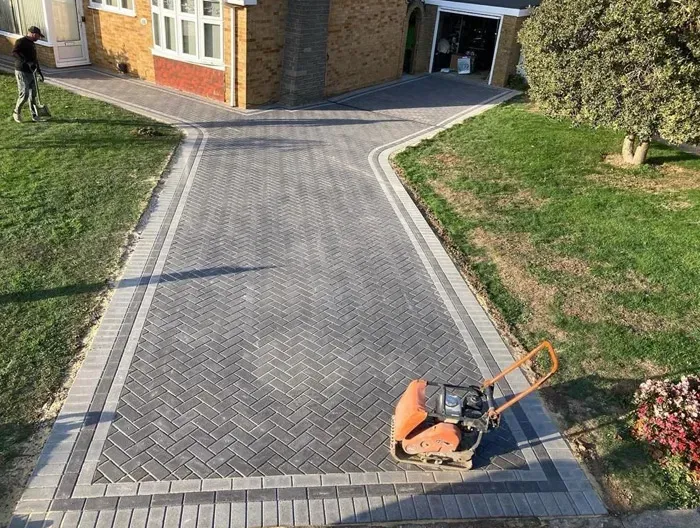
Many homeowners think the sand between paving blocks is only there to stop weeds. In reality, kiln-dried jointing sand is what makes a block-paved driveway strong enough to park on.
Concrete blocks are laid loose onto a compacted sharp sand bed without mortar. When kiln-dried silica sand is swept into the tight gaps and vibrated down, it creates friction between every neighbouring block—known in the trade as interlock. When a car wheel presses down on one block, that sand transfers the load across the surrounding area.
- Blocks shift and twist: Without full sand joints, braking or turning steering wheels pushes blocks sideways and opens uneven gaps.
- Edges chip and spall: Bare concrete blocks rubbing directly against each other crack along the top chamfers.
- Sub-base water washout: Empty joints let heavy rain pour straight into the bedding sand underneath, leading to rutting and sunken patches.
- Faster weed regrowth: Open cavities trap windblown soil and moss spores within weeks.
Timing matters: Kiln-dried sand will clump and bridge on the surface if brushed onto damp paving. We always wait for a completely dry surface—usually returning a day or two later once the weather allows—before sweeping the sand thoroughly into every joint.
When Cleaning Is Enough vs. Repair or Replacement
Before spending money on a clean, it pays to check the structure underneath. A pressure wash makes sound paving look sharp again, but it cannot fix a failed base.
- A clean & re-sand (or repoint) is usually enough when: The paving sits level with good falls away from the house, and the only issues are moss, algae, weathered mortar joints, or a few slightly loose blocks that can be lifted and re-bedded.
- You need structural repairs or a relay when: There are deep sunken tyre tracks in the drive (showing sub-base failure), dozens of rocking patio slabs with water pooling against damp-proof courses, or frost-shattered stone that is actively flaking apart.
What Drives the Cost of Safe Paving Cleaning?
Most residential driveway or patio cleans take between half a day and a full day, with a dry follow-up visit if block paving needs re-sanding. Quotes depend on:
- Total area (m²): Larger driveways and wrap-around patios take longer to rotary clean and rinse down.
- Surface type & condition: Heavy black spot lichen on sandstone needs specialist chemical treatment; block paving needs bags of kiln-dried sand included.
- Joint repairs needed: Patching or fully repointing blown-out patio mortar adds material and labour time.
- Optional sealing: Applying a breathable stone sealer or block-paving stabiliser adds an extra dry-weather coat but slows down future moss and oil staining.
Want Your Driveway or Patio Cleaned Without the Risk?
Speak to for honest advice on your stone or block paving. We cover Canterbury and the surrounding Kent area with safe rotary cleaning, proper re-sanding, and straightforward upfront quotes.
Related Services & Guides
← Back to all guidesDriveway and Patio Cleaning Canterbury
Elite Paving and Roofing LTD offers professional driveway & patio cleaning in Canterbury & Kent. Expert pressure washing restores your outdoor spaces. Free quote today!
Do I Need Planning Permission for a Driveway?
Check if a new driveway in Canterbury or Kent needs planning permission: the five-square-metre rule, permeable surfaces and KCC dropped kerbs.
How Much Does a New Patio Cost?
Get realistic per-square-metre patio costs. Learn how excavation, sub-base depth, drainage and waste removal drive prices so you can compare quotes.
How Long Does Garden Landscaping Take?
Realistic timescales for garden landscaping in Kent, and how access, clay soil, wet weather and a KCC skip licence affect the start date.
Do You Need Scaffolding for Roof Work?
Find out when roof work requires scaffolding rather than ladders, how long it stays up, and when you need a Kent pavement licence.
Block Paving Patterns: Which Is Strongest?
Compare herringbone, stretcher bond and basket weave for driveways in Canterbury and Kent, and how edges and a compacted base stop wheel rutting.
Resin-Bound vs Resin-Bonded: What's Different?
Compare permeable resin-bound and non-porous resin-bonded driveways, and what the front-garden five-square-metre drainage rule means in Kent.
How Long Does a Tarmac Driveway Last?
How long a tarmac driveway lasts, what makes edges crumble, and when a front-garden tarmac drive in Kent needs planning permission.
What Is the Best Gravel Size for a Driveway?
Whether 14mm or 20mm angular shingle is best for a driveway, plus depth, membranes, grids, and why gravel can be permitted development.
Is Porcelain Paving Slippery When Wet?
Why outdoor R11 porcelain keeps its grip in the rain, unlike indoor tiles, and how a full mortar bed keeps slabs secure.
Should You Seal an Indian Sandstone Patio?
Whether to seal an Indian sandstone patio against lichen, stains and frost, when to wait after laying, and matte versus colour-enhancing sealers.
Why Do Patio Slabs Come Loose?
Why patio slabs rock or sink (spot-bedding, frost heave and failed pointing), and how re-bedding and repointing fix it.
Does Artificial Grass Drain Properly in Rain?
Learn how perforated backing, granite dust, and a Type 1 sub-base drain heavy rain on Kent clay, plus how to keep pet lawns puddle- and odour-free.
Wooden vs Concrete Fence Posts: Which Lasts?
Timber versus concrete fence posts for rot and wind, and the Planning Portal 1-metre / 2-metre height rules for fences in England.
Signs Your Chimney Needs Repointing or Flashing
Signs of chimney trouble (lifted lead, cracked flaunching, loft damp), and when chimney work in a Canterbury conservation area needs permission.
How Soon Can You Walk on and Mow New Turf?
How soon you can walk on and mow new turf, how to check it has rooted, and watering and first-cut tips.
Can You Fix a Leaking Roof From Inside the Loft?
Why internal sealants and spray foam can trap moisture in a loft, and when a roof repair in Kent needs Building Regulations approval.
Can You Put a New Flat Roof Over Old Felt?
When to overlay or strip an old felt flat roof, the risks of trapped damp, and the Planning Portal 25% envelope and 50% roof rule.
Why Is Rainwater Dripping Behind My Gutters?
Why rainwater drips behind apparently clear gutters (perished eaves felt, missing trays and sagging brackets), and how to put it right.
Do Gutter Guards and Hedgehogs Actually Work?
Whether mesh gutter guards and brush hedgehogs actually help with leaves, moss and roof grit, and when hand clearing is better.