How the Layers Work Together in Heavy Rain
When we dig out a garden for artificial turf, we are building a permeable drainage system from the soil upwards. Every layer has a job, and leaving one out or swapping materials to save a few quid is where drainage problems start.
- Perforated backing: Quality artificial grass has drainage holes punched at regular centres across the entire underside. Water drops straight through the pile and out of the backing within seconds rather than running off the surface.
- Crushed granite dust (25mm–30mm): On top of the main stone base, we screed a thin, dead-level bed of 0–4mm or 0–6mm crushed granite dust. Unlike soft sand or clay-heavy sharp sand, granite dust binds tight under a wacker plate without turning mushy when soaked.
- Compacted MOT Type 1 (75mm–100mm): Beneath the granite dust sits a properly whacked layer of clean Type 1 limestone or granite. Those angular stones lock together for strength while leaving tiny air pockets that take the surge of a summer storm and release it slowly into the ground below.
- Non-woven geotextile membrane: We lay the membrane under the Type 1 stone — straight onto the dug-out earth — to stop wet clay pumping upwards into the clean stone over the years.
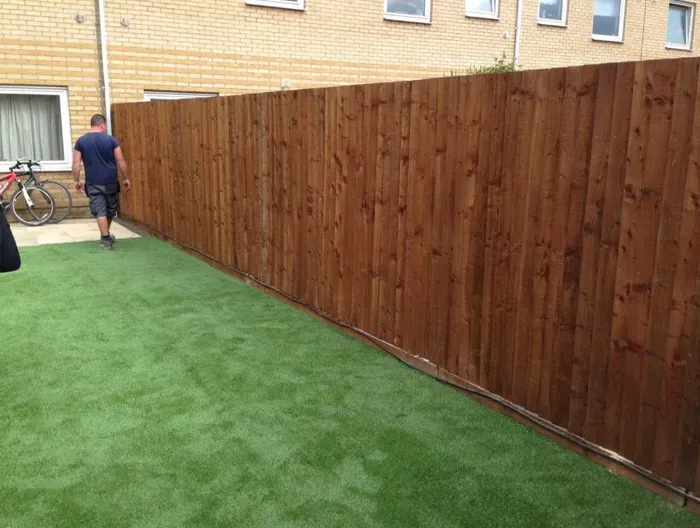
Clean perimeter edging and a firm, free-draining sub-base keep the lawn flat and dry all year.
Handling Heavy Kent Clay and Sloping Gardens
Anyone who has dug a spade into a garden around Canterbury, Herne Bay, or out towards Ashford knows how stubborn local clay can be. In winter, once the top few inches of clay are saturated, rainwater has nowhere quick to go.
On clay sites, a shallow 50mm scrape is not enough. We dig down deeper — typically 100mm to 130mm in total — so there is a full 100mm of Type 1 stone sitting beneath the granite dust. That depth gives rainwater enough holding capacity to soak away steadily instead of backing up to the surface.
Where a lawn slopes down towards the house or a patio, we also build a gentle fall away from your brickwork and damp-proof course, or cut a perforated land drain wrapped in gravel along the low boundary. If you are replacing a front lawn that sits beside a pavement, keeping the whole build permeable also helps stop rainwater sheeting onto the street in line with GOV.UK permeable surfacing guidance.
You can see how we specify base depths and edge restraints in full on our page covering how our team prepares and fits artificial grass lawns across Canterbury.
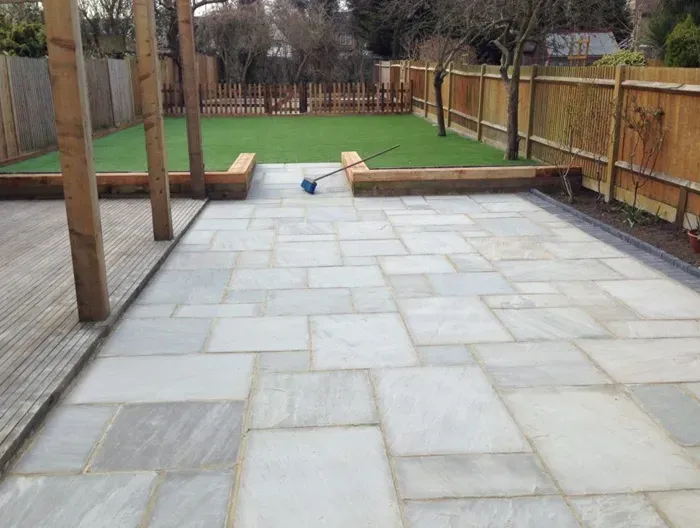
Raised sleeper borders and proper falls keep water draining away from neighbouring patios and decking.
Advice for Dog Owners: Keeping Lawns Odour-Free and Puddle-Free
Dog owners often worry that fake grass will smell like a kennel after a warm spell. That only happens when urine gets trapped in the upper layers instead of flushing straight through into the stone sub-base.
Leave out the top weed membrane for pets: On standard gardens, some fitters put a second weed fabric directly under the grass. With dogs, that fabric holds urine droplets and bacteria right under the pile. We keep the geotextile below the Type 1 and let the granite dust drain straight through.
Skip sharp sand if you have dogs: Sand holds moisture and smells far longer than crushed granite. Granite dust drains clean and does not harbour odours in the same way.
Consider a zeolite infill: Brushing natural zeolite granules into the pile binds ammonia before it can turn into odour, then releases it harmlessly when it rains.
Simple weekly care: Pick up solids promptly and give favourite toilet spots a quick hose down once a week during dry summer spells. Use a pet-safe enzyme turf cleaner rather than neat bleach, which can fade the fibres and damage latex backing.
Can a Waterlogged Artificial Lawn Be Repaired, or Does It Need Replacing?
We get called out regularly to look at artificial lawns laid a couple of years ago that now squelch underfoot or puddle after light drizzle. Whether it can be saved depends entirely on what is hiding underneath the carpet.
When a Lift-and-Relay Repair Works
- • Water only pools in one hollow or along a sunken edge where a timber border has rotted.
- • The grass itself is in good nick and sits on a solid Type 1 and granite dust base underneath.
- • A blocked patio gully or choked channel drain at the edge of the lawn is causing water to back up.
- • In these cases, we can carefully peel back the affected section, re-level with fresh granite dust or clear the drain, and refit the original grass.
When Full Replacement Is the Honest Answer
- • The turf was laid straight over mud, old dead lawn, or a slab of flat concrete with no drainage holes.
- • Builders used soft sand or clay-contaminated hoggin, which has turned into wet porridge.
- • The whole lawn smells stale and the backing has started to rot or delaminate from sitting in standing water.
- • Trying to patch over a failing base wastes money — the contaminated sand has to come out so a proper stone sub-base can go in.
What Happens on the Day and What Drives the Price
For a typical 30–50m² back garden, the job usually takes two days from dig-out to final brush. On day one we strip the old turf and clay spoil, lay the geotextile, compact the Type 1 sub-base in layers with a heavy wacker plate, and fit treated timber battens or concrete edging around the perimeter. On day two we screed the granite dust dead level, roll out and cut the grass, glue any joins with proper seam tape, pin the edges, and power-brush the pile upright.
Three things drive the cost more than the grass roll itself:
- Clay spoil removal: Heavy wet clay weighs a lot. A 100mm dig-out on a medium garden fills a 6-yard or 8-yard skip quickly, and wheelbarrowing it through a narrow side passage takes time.
- Extra drainage work: If your garden sits below neighbouring ground and needs a gravel French drain or soakaway crate tied in, that adds materials and digging hours.
- Perimeter borders: Fitting new sleeper retaining edges, kerbs, or fencing at the same time changes the scope compared to fixing into an existing brick patio edge.
5 Questions to Ask Any Installer Before You Book
- Are you laying at least 75mm–100mm of compacted MOT Type 1 underneath?
- Do you screed with crushed granite dust rather than building or sharp sand?
- Where does the weed membrane go — under the stone, not directly under the grass?
- What edge restraint are you fixing the turf into so it cannot lift or curl?
- Is skip hire and licensed waste disposal included in the written quote?
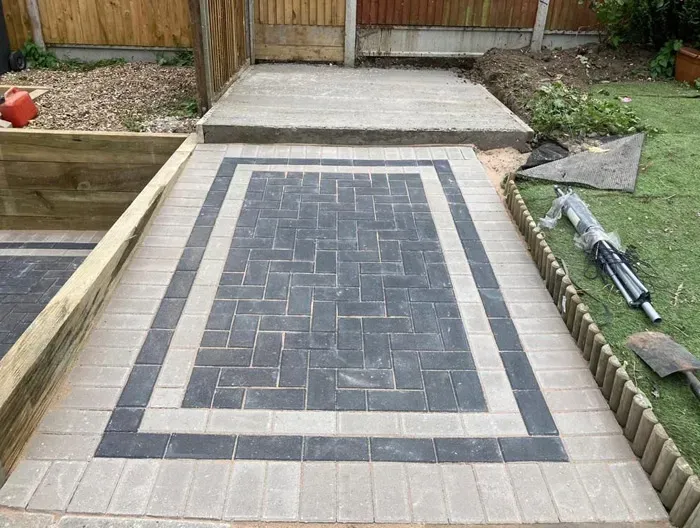
Clean edging against block paving and raised beds keeps the whole garden tidy.