Roofline & Guttering Guide
Why Is Rainwater Dripping Behind My Gutters?
By Elite Paving & Roofing Ltd, run by director Jerry Connors
If you have cleared the leaves out of your gutters and rainwater is still running down the brickwork, dripping from the soffit board, or staining your exterior walls, the gutter itself is rarely the only problem. Most of the time, water is bypassing the gutter completely at the roof edge—dropping through perished eaves felt, pooling behind the fascia where felt support trays are missing, or spilling over the back edge of sagging brackets.
The Four Main Reasons Water Gets Behind Your Fascia
When we get up the ladder to look at a damp wall or dripping soffit, the fault almost always sits in the narrow gap where the bottom row of roof tiles meets the back of the gutter. Here is what we actually find on site.
1. Perished or Torn Eaves Felt
Traditional black bitumen roofing felt (1F felt) breaks down first along the bottom 300mm at the eaves. Exposed to heat under the tiles, frost, and birds pecking at the overhang, it turns brittle, cracks, and curls back behind the fascia board. Any wind-driven rain or condensation running down the underlay then drops straight onto the top of the timber fascia or into the soffit box instead of discharging into the gutter.
2. Missing Felt Support Trays
On older roofs built without rigid plastic eaves protectors, the felt sags down between each rafter right behind the fascia. Rainwater collects in those pockets—known in the trade as ponding—until the damp felt tears or overflows backwards down the outside face of the masonry.
3. Sagging Gutter Brackets or Lost Fall
If fascia brackets are spaced too wide (more than a metre apart), or if the screws have pulled loose from damp timber behind a UPVC board, the gutter tilts under the weight of standing water. Once the back edge drops or twists away from the fascia, rainwater runs between the gutter and the board every time there is a heavy downpour.
4. Tiles Set Too Far Back or Mounted Too High
The bottom course of roof tiles should overhang the gutter by roughly 40mm to 50mm so water drops cleanly into the centre of the trough. If the gutter has been fitted too low down the fascia, or if the tiles sit short, brisk rain curls back under the tile lip—a capillary effect that pulls water straight down the front of the fascia behind the gutter.
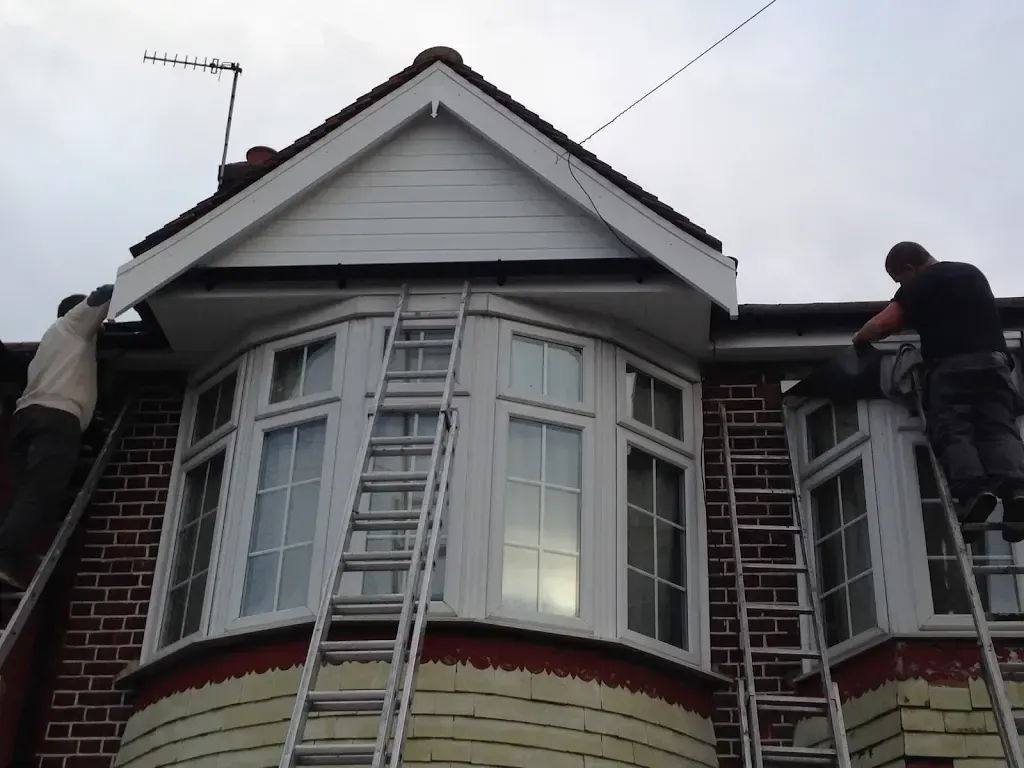
Checking the eaves line above a bay window—often where perished felt and loose brackets first show up as damp patches on the render or brickwork below.
Quick Checks From Ground Level
You do not need to climb a ladder to narrow down the cause. During steady rain, look from the garden or driveway with a phone zoom:
- Dripping from soffit joints or vents: Water is getting behind the fascia board, usually via split eaves felt.
- Streaks directly down the fascia face: Likely short tile overhang, a gutter hung too low, or twisted brackets.
- Green algae or white efflorescence on bricks: Long-term overflow behind the gutter or a perished union seal directly above.
- Damp patch inside an upstairs corner: Rainwater tracking back along a sagging felt pocket into the wall plate.
Simple Eaves Repair vs Full Roofline Replacement
An honest roofer should tell you when a targeted repair will solve the leak and when replacing the boards is the only sensible option. Pushing a full replacement when the backing timber is bone dry wastes your money—just as screwing new brackets into rotten wood does.
Felt Support Trays & Re-Bracketing
If your existing fascias and soffits are solid and only the bottom strip of felt has perished along one side of the house, we do not need to strip the whole roofline.
- We lift or slide back the bottom two courses of roof tiles along the affected run.
- The rotted bitumen felt is cut back cleanly to sound underlay above the wall line.
- A fresh strip of breathable membrane is lapped under the old felt and fitted over rigid UPVC felt support trays that sit cleanly into the gutter.
- If brackets are loose, we re-fix them at 800mm–900mm centres with proper stainless steel screws and adjust the fall toward the downpipe.
Swollen, Soft, or Capped-Over Timber
Where water has been tracking behind old wooden boards—or behind thin plastic capping nailed over old wood—for several winters, the timber turns spongy and stops holding gutter bracket screws.
- Attempting to re-screw brackets into soft timber only lasts until the next heavy storm.
- If rafter ends have begun to rot, those tails need cutting back and splicing with treated timber before new boards go on.
- In these cases, stripping everything back to bare rafters and fitting full-thickness UPVC boards, eaves trays, and ventilated soffits is the lasting fix.
If your boards are past patching, see how we handle full fascia, soffit and guttering replacements across Canterbury.
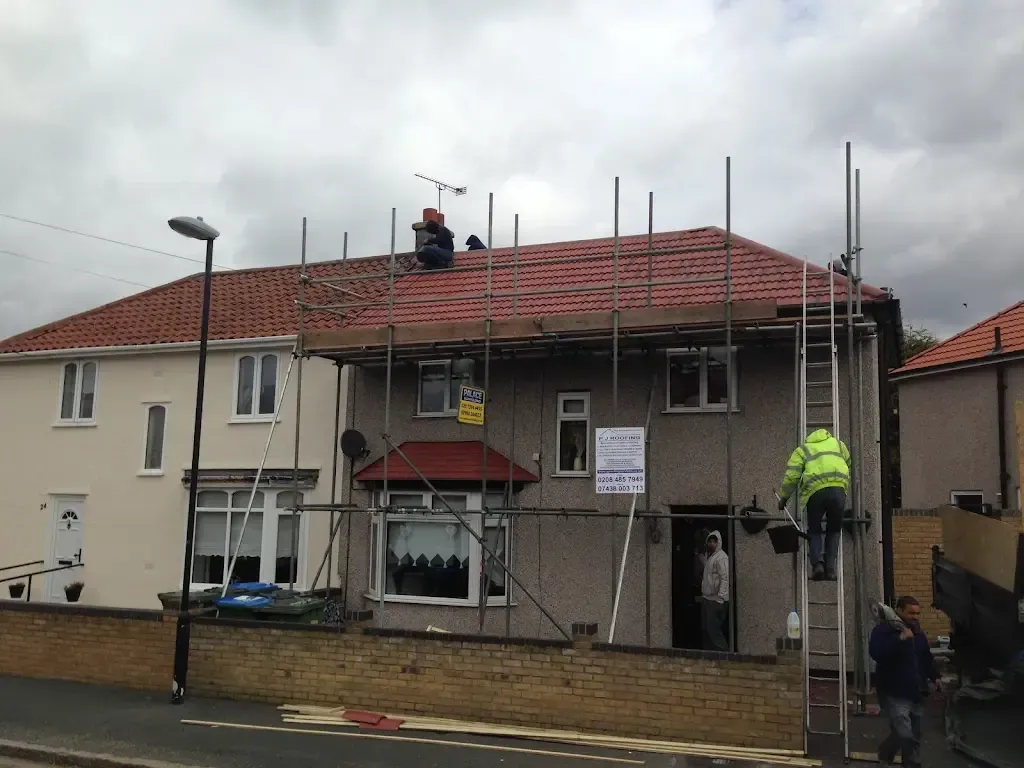
Two-storey elevations and runs over conservatories normally call for proper scaffolding so the bottom tile courses can be lifted safely.
What Drives the Cost & What Happens on the Day
Every house is different, so we price after seeing the eaves up close rather than guessing over the phone. The main things that shift the cost and timescale are practical site factors:
Height & Scaffolding
Bungalows and single-storey extensions can often be reached from ladders or a mobile tower. Two- or three-storey walls—or eaves above a porch or conservatory—require scaffolding. If scaffolding has to stand on a public pavement or road, a Kent highways skip and scaffold licence will also be needed.
Tile Type & Verge Detail
Small clay or concrete plain tiles take longer to unhook, stack, and re-lay than large interlocking profile tiles. Mortgared verges, valleys, and awkward box-ends also add fitting time.
Rafter End Condition
You only know the true state of the rafter tails once the old fascia comes away. Splicing new treated timber onto sound wood is straightforward, but it adds a couple of hours of carpentry.
Realistic Timescales
Fitting felt support trays along one elevation usually takes half a day to a day. Full roofline replacement around a standard three-bedroom semi typically takes one to three days once access is up.
How We Leave the Job
We sheet down driveways, patios, and flowerbeds before lifting a tile, fit bird combs and over-fascia vents where the roof needs airflow, check every gutter fall with a level, and water-test the run with a hose so you can see it draining cleanly before we pack away. All old rotten felt, timber, and mortar offcuts are cleared from site.
Got Water Running Behind Your Gutters?
Whether it just needs a few lengths of felt support tray and fresh brackets or a full strip-back and UPVC replacement, we will tell you straight what the eaves actually need and give you a written quote with no obligation.
Related Services & Guides
Further advice and roofline services from our team across Canterbury and Kent.
Fascias Soffits Guttering Canterbury
Elite Paving and Roofing LTD provides expert fascias, soffits and guttering across Canterbury & Kent. Durable UPVC replacements, repairs & installations. Free quote!
Do I Need Planning Permission for a Driveway?
Check if a new driveway in Canterbury or Kent needs planning permission: the five-square-metre rule, permeable surfaces and KCC dropped kerbs.
How Much Does a New Patio Cost?
Get realistic per-square-metre patio costs. Learn how excavation, sub-base depth, drainage and waste removal drive prices so you can compare quotes.
How Long Does Garden Landscaping Take?
Realistic timescales for garden landscaping in Kent, and how access, clay soil, wet weather and a KCC skip licence affect the start date.
Do You Need Scaffolding for Roof Work?
Find out when roof work requires scaffolding rather than ladders, how long it stays up, and when you need a Kent pavement licence.
Block Paving Patterns: Which Is Strongest?
Compare herringbone, stretcher bond and basket weave for driveways in Canterbury and Kent, and how edges and a compacted base stop wheel rutting.
Resin-Bound vs Resin-Bonded: What's Different?
Compare permeable resin-bound and non-porous resin-bonded driveways, and what the front-garden five-square-metre drainage rule means in Kent.
How Long Does a Tarmac Driveway Last?
How long a tarmac driveway lasts, what makes edges crumble, and when a front-garden tarmac drive in Kent needs planning permission.
What Is the Best Gravel Size for a Driveway?
Whether 14mm or 20mm angular shingle is best for a driveway, plus depth, membranes, grids, and why gravel can be permitted development.
Is Porcelain Paving Slippery When Wet?
Why outdoor R11 porcelain keeps its grip in the rain, unlike indoor tiles, and how a full mortar bed keeps slabs secure.
Should You Seal an Indian Sandstone Patio?
Whether to seal an Indian sandstone patio against lichen, stains and frost, when to wait after laying, and matte versus colour-enhancing sealers.
Why Do Patio Slabs Come Loose?
Why patio slabs rock or sink (spot-bedding, frost heave and failed pointing), and how re-bedding and repointing fix it.
Does Artificial Grass Drain Properly in Rain?
Learn how perforated backing, granite dust, and a Type 1 sub-base drain heavy rain on Kent clay, plus how to keep pet lawns puddle- and odour-free.
Wooden vs Concrete Fence Posts: Which Lasts?
Timber versus concrete fence posts for rot and wind, and the Planning Portal 1-metre / 2-metre height rules for fences in England.
Signs Your Chimney Needs Repointing or Flashing
Signs of chimney trouble (lifted lead, cracked flaunching, loft damp), and when chimney work in a Canterbury conservation area needs permission.
Can Pressure Washing Damage Paving or Stone?
How high-pressure jet washing can pit sandstone and strip pointing, and safer rotary cleaning and re-sanding methods.
How Soon Can You Walk on and Mow New Turf?
How soon you can walk on and mow new turf, how to check it has rooted, and watering and first-cut tips.
Can You Fix a Leaking Roof From Inside the Loft?
Why internal sealants and spray foam can trap moisture in a loft, and when a roof repair in Kent needs Building Regulations approval.
Can You Put a New Flat Roof Over Old Felt?
When to overlay or strip an old felt flat roof, the risks of trapped damp, and the Planning Portal 25% envelope and 50% roof rule.
Do Gutter Guards and Hedgehogs Actually Work?
Whether mesh gutter guards and brush hedgehogs actually help with leaves, moss and roof grit, and when hand clearing is better.