Do You Need Scaffolding for Roof Work?
By Elite Paving & Roofing Ltd, run by director Jerry Connors
Not every roof job needs a house wrapped in poles and boards, but cutting corners on access is where tiles get cracked and people get hurt. Here is how an experienced roofer decides between a roof ladder, a small tower, and full scaffolding — plus how long it stays up and when council pavement permits apply.
Local Know-How for Canterbury & Kent
- If scaffold or a skip has to sit on a public road or pavement in the Canterbury district, you need a Kent County Council highways permit or licence before work starts. In Gillingham and the rest of Medway, Medway Council is the highway authority. Source: Kent County Council, Medway Council, Medway Council.
Related: Roofing services · Our work in Canterbury
The Short Answer
If a repair takes an hour or two and only involves one person swapping a couple of slipped tiles, clearing a valley, or sealing a minor flashing gap, a properly footed ladder and a roof ladder with a ridge hook will usually do the job safely. Once you are working for half a day or more, lifting heavy materials, repointing a chimney stack, replacing guttering along a whole elevation, or stripping back tiles and felt, scaffolding becomes both a practical necessity and a legal requirement under Work at Height rules.
When Roof Ladders or a Tower Suffice
Using ladders is sensible only for short-duration, light-duty tasks where the roofer can keep a stable footing and avoid stretching sideways.
- ✓ Single slipped or cracked tiles: Sliding in one or two replacement tiles using a cat ladder hooked securely over the ridge.
- ✓ Spot leadwork checks: Dressing down a lifted piece of step flashing or re-sealing a small joint on a lower porch roof.
- ✓ Gutter clearing and bracket swaps: Routine cleaning or tightening loose gutter unions where ground below is level and firm.
- ✓ Bungalows and low single-storey extensions: Where a mobile aluminium scaffold tower gives a flat, guarded platform without a full tube-and-fitting build.
When Full Scaffolding Is Required
Health and Safety Executive (HSE) Work at Height guidance requires a proper edge-protected working platform whenever a job involves sustained labour, heavy loads, or fall risk at eaves height.
- ✓ Re-roofing or stripping large sections: Handling pallets of new tiles, breathable membrane, and battens safely without overloading the roof timbers.
- ✓ Chimney rebuilds and repointing: Working around a stack with buckets of mortar, bricks, and angle grinders requires a level four-sided platform.
- ✓ Ridge tile re-bedding or dry ridge systems: Lifting and resetting heavy concrete or clay ridge tiles across the full length of a roof.
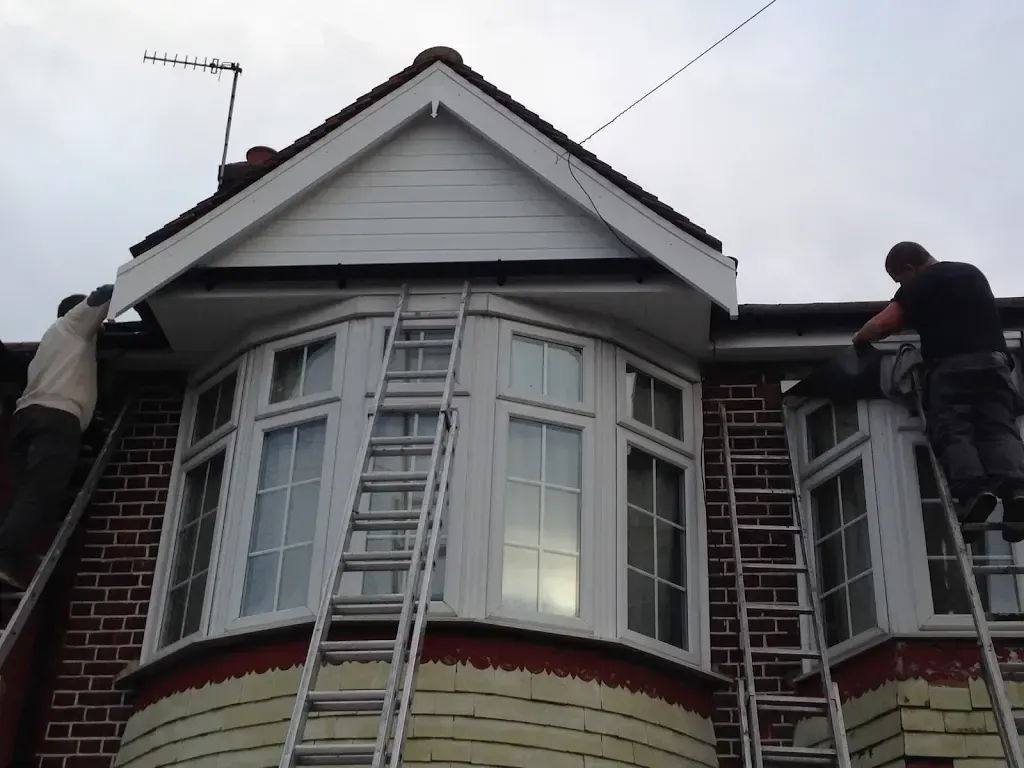
- ✓ Full fascia, soffit, and gutter replacement: Removing rotten timber bargeboards and fitting new UPVC along two-storey elevations cleanly and safely.
Why Trying to Skip Scaffolding Often Costs More
Homeowners understandably wince when scaffolding adds several hundred pounds to a quote. On a minor leak fix, you are right to question whether a full scaffold tower is overkill. On a larger job, though, trying to work off ladders almost always backfires.
Walking up and down a ladder carrying mortar buckets or bundles of tiles takes twice as long, so you end up paying more in labour than you saved on scaffold hire. Worse, roofers leaning out from a ladder cannot always inspect surrounding battens, felt laps, or leadwork properly, which is how secondary leaks get missed.
When our Canterbury and Kent roofing team prices a job, we tell you upfront whether a repair can be reached safely by ladder or if scaffolding is non-negotiable. If a ridge needs re-bedding across half the roof, scaffolding protects your property, keeps broken debris off your driveway and conservatory, and lets us finish the job properly in half the time.
What Actually Drives Scaffolding Costs?
- Number of elevations: A single front or rear run is far cheaper than scaffolding all four sides of a detached house.
- Bridging obstacles: Spanning over a conservatory, bay window, or pitched porch roof needs extra beams and bracing.
- Chimney height: A saddle or tower scaffold built right up onto the roof slope to reach a tall stack adds poles, boards, and assembly time.
- Carry distance: Tight alleyways or steps where scaffold tubes have to be carried by hand from the lorry take longer to load and unload.
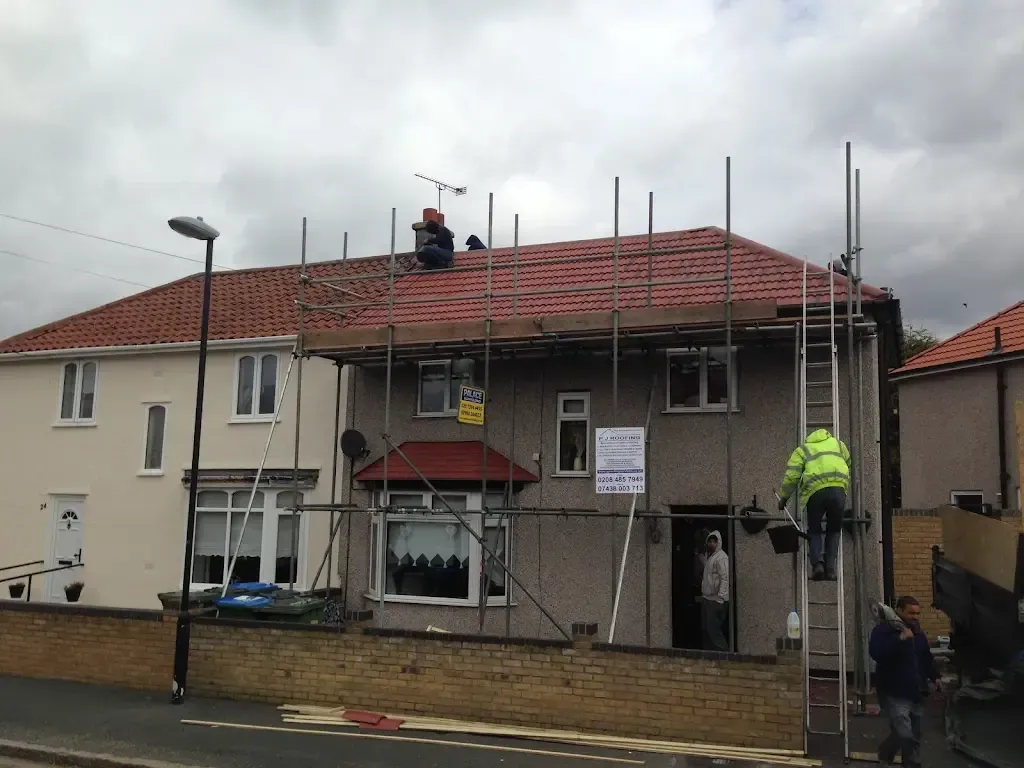
How Long Does Scaffolding Stay Up?
Most scaffolders charge a standard basic hire period — typically four weeks — because the main expense is the gang's labour putting it up and taking it down, not the tubes sitting on your wall.
In practice, the scaffolding should only stay on your property for as long as the work takes plus a small buffer for erection and strike:
- Chimney repointing or leadwork repairs: Usually erected a day or two before we start, 1 to 3 days on the tools, and struck within a few days of completion.
- Full fascia, soffit, and guttering swap: Typically 3 to 5 days of work, with scaffold up for roughly a week to 10 days total.
- Complete roof strip and re-tile: Allow 1 to 2 weeks on site depending on roof size and weather, meaning scaffolding is normally up for around 2 to 3 weeks in total.
Good contractors book the scaffold strike before the job finishes so you are not left staring at metal poles out of your bedroom window for a month after the roofers have left.
What Happens on the Day It Goes Up
Before the scaffold lorry arrives, it helps to clear cars off the driveway and move fragile garden pots or patio furniture back from the house walls. On a standard semi or detached home, a two- or three-man scaffold gang usually has a front or rear elevation built in half a day.
What to Look Out For on Site
- Sole boards under every base plate: Scaffold poles should sit on timber sole pads, never directly onto block paving, tarmac, or soft flowerbeds, so they do not sink or crack your drive.
- Foam sleeves on lower poles: Bright foam padding around upright standards near front paths or driveways prevents scrapes and bumps in the dark.
- Tie-ins and window clearance: Poles should be tied securely without blocking escape windows or snapping guttering brackets.
- Signed handover tag (Scafftag): Every working scaffold should be inspected and tagged as safe before roofers climb onto it.
When You Need a Kent Highways Licence for Scaffolding or Skips
If your house has a front garden or private driveway and all scaffold legs sit inside your boundary, you do not need a council road permit. However, if your front wall opens straight onto a public pavement, or if a waste skip has to sit on the road outside because there is no driveway space, highway rules apply.
Across Canterbury and the wider county, placing any scaffold structure or builder's skip on a public footpath or carriageway requires a Kent highways skip and scaffold licence from Kent County Council before work begins. In Gillingham and the rest of Medway, Medway Council is the highway authority and issues the skip and scaffolding licences instead.
Who Applies for the Licence?
You should not have to fill out highway paperwork yourself. Licensed scaffolders and skip companies apply directly because they must submit their public liability insurance and method statements with the application.
Notice Times & Planning Ahead
Council highway teams normally require several working days' notice (often 5 to 10 working days) to approve a pavement scaffold, and longer if a narrow street needs temporary pedestrian barriers or traffic management.
Public Pavement Safety
Pavement scaffolding must maintain a clear, safe walkway underneath (usually with double boards or protective fans so dust and tools cannot fall onto pedestrians), high-visibility pole sleeves, and warning lights after dark.
Common Questions About Roof Scaffolding
Can scaffolding go up if I have a conservatory at the back?
Yes. Rather than resting poles on the conservatory roof, scaffolders build two towers either side of it and bridge across with heavy-duty alloy beams (a bridged scaffold). It adds a little to the hire cost, so always mention a rear conservatory or lean-to when asking for a quote.
What if the scaffolding needs to touch my neighbour's drive or garden?
If a side alley belongs to your neighbour or a scaffold foot needs to sit on their side of a semi-detached boundary, speak to them first and get polite agreement. On most terraced and semi-detached jobs, a quick conversation beforehand avoids delays on erection morning.
Does scaffolding damage new block paving or resin driveways?
Not when set up properly. Provided thick timber sole boards are laid flat under the base plates to spread the weight and drag marks are avoided when carrying tubes, block paving, tarmac, and resin drives come through unmarked.
Is scaffolding included in a roofing quote?
Always check your written quote carefully. Some roofers list scaffolding as a separate line item or ask you to pay the scaffolder direct, while others include the full erection, hire, and strike in one fixed price. We state clearly in our written quotation whether access equipment is included.
Not Sure What Access Your Roof Job Needs?
We will come out, take a proper look from ground and eaves level, and give you a straight answer on whether it is a quick ladder fix or a job that needs scaffolding — with a clear, written quotation and no pushy sales talk.
Related Services & Guides
Explore matching roofing services and practical homeowner advice.
Roofing Services Canterbury
Elite Paving and Roofing LTD offers professional roofing services in Canterbury and across Kent. Our local roofers provide new roofs, reliable repairs and roofline solutions with guaranteed quality.
Do I Need Planning Permission for a Driveway?
Check if a new driveway in Canterbury or Kent needs planning permission: the five-square-metre rule, permeable surfaces and KCC dropped kerbs.
How Much Does a New Patio Cost?
Get realistic per-square-metre patio costs. Learn how excavation, sub-base depth, drainage and waste removal drive prices so you can compare quotes.
How Long Does Garden Landscaping Take?
Realistic timescales for garden landscaping in Kent, and how access, clay soil, wet weather and a KCC skip licence affect the start date.
Block Paving Patterns: Which Is Strongest?
Compare herringbone, stretcher bond and basket weave for driveways in Canterbury and Kent, and how edges and a compacted base stop wheel rutting.
Resin-Bound vs Resin-Bonded: What's Different?
Compare permeable resin-bound and non-porous resin-bonded driveways, and what the front-garden five-square-metre drainage rule means in Kent.
How Long Does a Tarmac Driveway Last?
How long a tarmac driveway lasts, what makes edges crumble, and when a front-garden tarmac drive in Kent needs planning permission.
What Is the Best Gravel Size for a Driveway?
Whether 14mm or 20mm angular shingle is best for a driveway, plus depth, membranes, grids, and why gravel can be permitted development.
Is Porcelain Paving Slippery When Wet?
Why outdoor R11 porcelain keeps its grip in the rain, unlike indoor tiles, and how a full mortar bed keeps slabs secure.
Should You Seal an Indian Sandstone Patio?
Whether to seal an Indian sandstone patio against lichen, stains and frost, when to wait after laying, and matte versus colour-enhancing sealers.
Why Do Patio Slabs Come Loose?
Why patio slabs rock or sink (spot-bedding, frost heave and failed pointing), and how re-bedding and repointing fix it.
Does Artificial Grass Drain Properly in Rain?
Learn how perforated backing, granite dust, and a Type 1 sub-base drain heavy rain on Kent clay, plus how to keep pet lawns puddle- and odour-free.
Wooden vs Concrete Fence Posts: Which Lasts?
Timber versus concrete fence posts for rot and wind, and the Planning Portal 1-metre / 2-metre height rules for fences in England.
Signs Your Chimney Needs Repointing or Flashing
Signs of chimney trouble (lifted lead, cracked flaunching, loft damp), and when chimney work in a Canterbury conservation area needs permission.
Can Pressure Washing Damage Paving or Stone?
How high-pressure jet washing can pit sandstone and strip pointing, and safer rotary cleaning and re-sanding methods.
How Soon Can You Walk on and Mow New Turf?
How soon you can walk on and mow new turf, how to check it has rooted, and watering and first-cut tips.
Can You Fix a Leaking Roof From Inside the Loft?
Why internal sealants and spray foam can trap moisture in a loft, and when a roof repair in Kent needs Building Regulations approval.
Can You Put a New Flat Roof Over Old Felt?
When to overlay or strip an old felt flat roof, the risks of trapped damp, and the Planning Portal 25% envelope and 50% roof rule.
Why Is Rainwater Dripping Behind My Gutters?
Why rainwater drips behind apparently clear gutters (perished eaves felt, missing trays and sagging brackets), and how to put it right.
Do Gutter Guards and Hedgehogs Actually Work?
Whether mesh gutter guards and brush hedgehogs actually help with leaves, moss and roof grit, and when hand clearing is better.