What You Can Spot From the Ground (and Inside the Loft)
You do not need to climb onto the roof to catch early chimney trouble. In fact, we always tell homeowners to stay off ladders and check from ground level first, especially after a windy spell or hard frost.
1. Recessed or Washed-Out Mortar
Stand back across the street or in the garden with binoculars. Healthy mortar sits flush or neatly weather-struck against the brick face. If you see deep dark shadows under the bricks, missing chunks, or moss growing out of the beds, water is sitting in those joints and freezing every winter.
2. Lifted or Split Lead Flashing
Leadwork seals the joint where the brick stack meets your roof tiles. Over time, thermal movement pulls the top edge of the lead out of the mortar chase, or wind lifts the apron at the front. Even a pencil-width gap lets driving rain track straight down the underside of the felt.
3. Cracked Flaunching & Loose Pots
The flaunching is the angled mortar bed at the very top of the stack that holds the chimney pots in place and sheds rainwater. If a pot looks slightly tilted, or you find lumps of grey sand-and-cement in your guttering, the flaunching has cracked and started breaking up.
4. Damp Loft Staining & Salt Marks
Head up into the loft with a torch during or just after rain. Look at the rafters and felt tight against the chimney brickwork for wet patches or white, chalky salt marks (efflorescence). Inside the bedrooms below, damp chimney breasts often show yellowing wallpaper or flaking paint high up near the ceiling line.
Why Mortar Choice Matters on Older Kent Brickwork
One of the biggest mistakes we fix on older houses around Canterbury and across East Kent is hard cement mortar smeared over soft clay bricks. Earlier properties were built with softer, breathable lime-rich mortar so moisture could escape back out through the joints rather than through the brick itself.
If someone repoints an older stack with a strong, rigid sand-and-cement mix, moisture gets trapped behind the hard outer edge. Come January, that trapped water freezes, expands, and blows the faces right off the bricks—a problem known as spalling. Once brick faces start blowing off, simple repointing is no longer enough and bricks have to be cut out and replaced.
When we repoint a stack, we rake out the weathered mortar to a proper depth—usually 20mm to 25mm—flush the dust out, and match the mix to the age of the brickwork. On heritage or soft red-brick stacks, that means using a breathable hydraulic lime mix; on newer concrete-brick or modern stacks, a properly gauged mortar with plasticiser works as intended.
Repair vs Rebuild: Honest Trade Judgment
Homeowners often worry that a damp patch means the whole chimney has to come down. In reality, most stacks we inspect only need targeted repairs, provided you catch them before frost gets into the core.
| What We Find Up Top | Usually Enough | When Full Rebuild Is Needed |
|---|---|---|
| Mortar joints | Rake out all four faces to 20–25mm and repoint; replace a few frost-damaged bricks. | Mortar has turned to powder all the way through and courses are visibly leaning. |
| Lead flashing | Re-dress lifted lead, fit new lead wedges, and seal the chase with lead sealant. | Lead is paper-thin, cracked across bends, or short of Code 4/5 weight—full new apron, step flashing, and back gutter. |
| Top of stack | Chip off cracked flaunching, re-bed pots, and lay a fresh frost-resistant flaunching crown. | Top 4–6 brick courses have separated or the damp proof tray has failed, requiring a partial take-down and rebuild. |
If you are already seeing loose bricks or active leaks into the loft, our team can carry out a full inspection and chimney repointing, lead flashing, and stack repair work before winter rain makes the internal damage worse.
What Drives the Cost of Chimney Work
Every stack is different, so honest pricing comes down to a few straightforward site factors rather than guesswork:
- Access and scaffolding: A straightforward lead repair near the eaves might only need roof ladders or a small tower, whereas full four-sided repointing or rebuilding on a two-storey house needs proper scaffolding around the stack. If the scaffold has to sit on a public pavement or road, a Kent highways skip and scaffold licence will be needed before erection.
- Size and position of the stack: A tall ridge stack shared with a neighbour takes more time and materials than a small single-flue stack on a bungalow gable end.
- Extent of brick and lead replacement: Swapping out 15 spalled bricks and fitting a new Code 4/5 lead back gutter adds material and labour time compared to straightforward repointing.
- Unused flues and ventilation: If you no longer use the fireplace, fitting ventilated terracotta caps or cowls stops rain dropping straight down the flue while keeping air moving so condensation does not build up inside.
What Happens on the Day
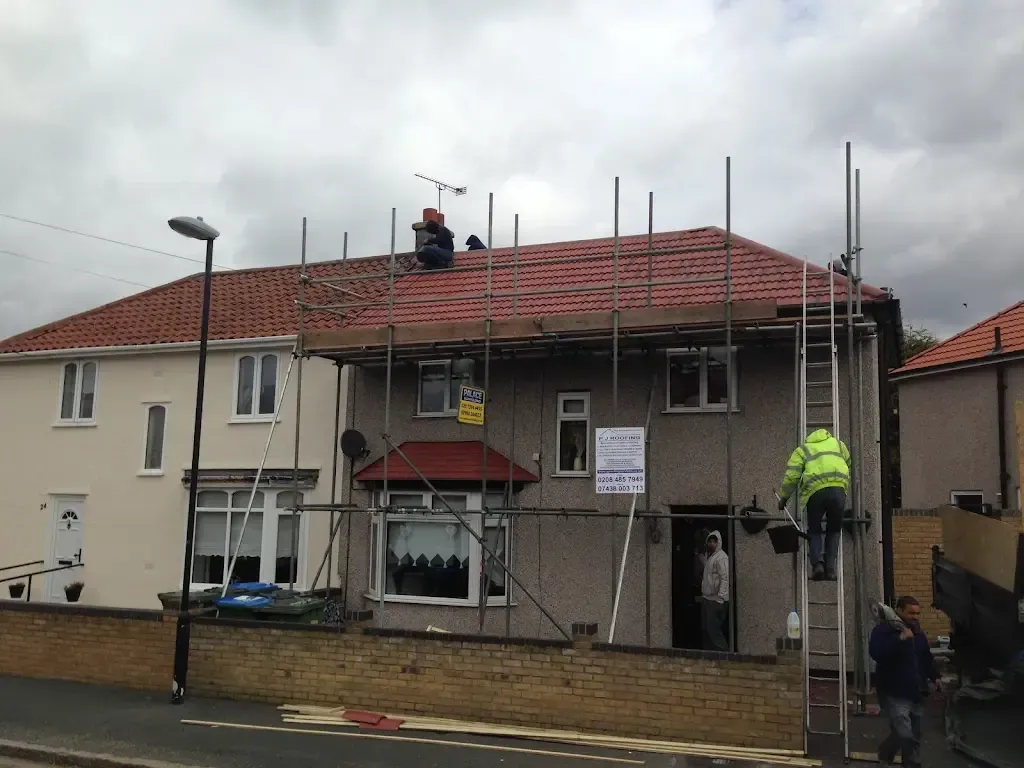
Once safe scaffolding is in place, we cover the adjacent roof tiles and gutters with sheets so old mortar does not block your downpipes. We rake out the joints using hand chisels or dust-controlled grinders—taking care not to nick the brick edges—and wash the brickwork down.
Leadwork is dressed cleanly into the chases using proper lead wedges and sealed with dedicated lead sealant (never ordinary silicone, which peels off after one summer). For a typical repoint and flashing overhaul, we are usually on and off the roof within 1 to 2 days, weather permitting.
Before we pack up, we clear all rubble out of the gutters, check the valleys, and sweep down around the house. If the property sits in a heritage zone and you are considering altering the height or removing a stack altogether, it is also worth checking Canterbury City Council planning permission guidance first.
Common Questions Homeowners Ask Us
Can you repoint a chimney in winter?
We can work through mild autumn and winter days as long as temperatures stay safely above freezing (usually 4°C and rising). Fresh lime or cement mortar will fail if it freezes before setting, so we keep an eye on the forecast and use hessian covers if a chilly night is due.
Why is water coming in when my flashing looks fine?
Often the leak is coming from the hidden back gutter behind the chimney (which you cannot see from the ground), from cracked flaunching on top, or straight through porous bricks and missing mortar on the upper courses. A damp chimney breast can also be caused by an uncapped flue letting rain fall inside.
Do you waterproof bricks with sealant after repointing?
On older breathable walls, we rarely recommend sealing bricks with film-forming coatings because they trap internal moisture. A properly repointed stack with sound flaunching and Code 4/5 leadwork sheds rainwater naturally without blocking breathability.