Why You Should Stay Off New Turf at First
When fresh turf goes down, it is sitting on top of damp, freshly raked topsoil. Even if we have firmed the ground down properly before laying, that top layer of soil is still soft, and the grass roots have not yet anchored into it.
Walk across it in the first fortnight and two things happen straight away: your heels leave sunken dips that turn into permanent bumps, and your weight shifts the turf rolls apart so gaps open along the joints. Fixing heel prints after the roots have taken hold usually means lifting a section, packing soil underneath, and waiting all over again.
If you genuinely have to step onto the lawn to reach a tap or move a sprinkler, lay a wide scaffold board or plank down first to spread your weight, and lift it straight back off when you are done so it does not sweat or flatten the grass underneath.
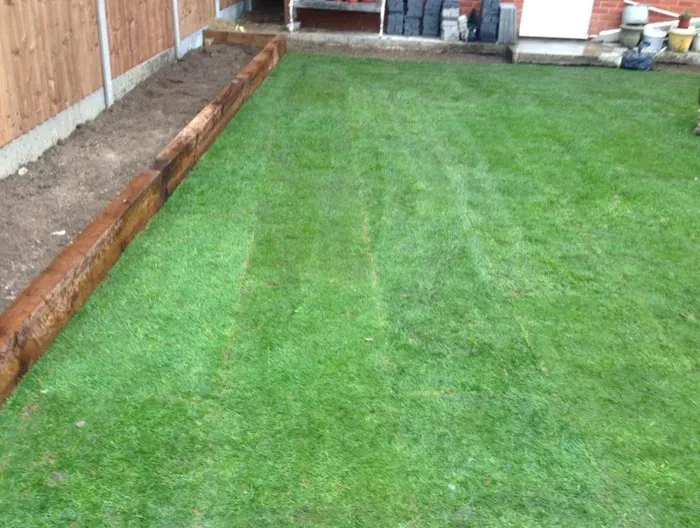
Freshly laid turf needs uninterrupted time for white feeder roots to bind into the topsoil below.
How to Check If It Is Ready: The Corner-Tug Test
Do not rely strictly on the calendar. Turf laid in warm spring or early autumn weather around Canterbury often roots in 10 to 14 days, whereas turf laid during a cold snap in late autumn or winter can easily take 3 to 4 weeks to knit properly.
Instead of guessing, do a quick rooting check around day 14:
- Pick an edge or corner of a turf roll near the patio or border where you can reach without walking on the lawn.
- Hold a small handful of grass blades between your fingers and give a gentle upward tug.
- If the turf lifts easily like a loose carpet, leave it alone for another 5 to 7 days and test again.
- If you feel clear resistance and the turf feels stitched down to the soil, the roots have started gripping and you can prepare for light foot traffic and the first cut.
Watering New Turf Properly (Especially in Dry Spells)
Lack of water in the first two weeks is the main reason new lawns shrink at the seams or go patchy brown. East Kent gets plenty of dry, breezy spells from April through September, and wind dries freshly laid rolls out faster than most homeowners expect.
How Often to Water
Give the turf a thorough soak within an hour of it being laid. For the first 10 to 14 days, water once a day in dry weather — or twice a day (early morning and late evening) if temperatures climb above 20°C. Avoid watering in the blazing midday sun, as half of it evaporates before soaking in.
How Much Water Is Enough?
A quick five-minute mist with a hose does very little. Lift a corner slightly at the end of watering: both the underside of the turf pad and the top 25mm of soil below should feel damp, not bone dry and not turning to sloppy mud. Puddles sitting on top mean you are overdoing it.
Trade tip: After two weeks, ease back from daily watering to a deeper soak every 2 or 3 days. Cutting back slightly encourages the roots to chase moisture further down into the ground rather than staying shallow at the surface.
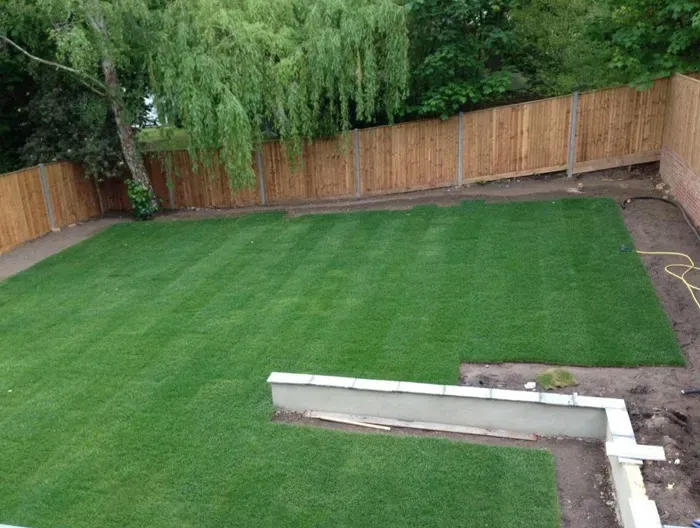
Keep the mower blades high for the first couple of cuts so you do not scalp young shoots.
The First Mow: Set the Blades High
Once the turf passes the corner-tug test and the grass reaches roughly 75mm (3 inches), it is ready for its first trim. Waiting much longer makes the grass top-heavy and tangled; cutting before the roots grip risks the mower pulling up loose corners.
- Wait for a dry day: Never mow new turf when the soil is waterlogged or the grass is soaking wet. Wet ground will rut under the mower wheels.
- Use the highest setting: Put your mower on its top height setting (around 45–50mm) and never take off more than a third of the grass height in one go.
- Check your blade is sharp: A dull blade chews and rips young grass tips, leaving a ragged brown cast across the lawn.
- Collect the clippings: Fit the grass box for the first few mows so heavy clippings do not sit on the turf and block sunlight.
- Turn carefully: Avoid spinning the mower sharply on one spot, as tight turns can tear up newly anchored turf edges.
Dogs, Children & Garden Furniture
Light walking to push a mower is one thing; kids playing football or a bouncy dog sprinting across the lawn is another. Try to keep heavy play and pets off the new grass for at least 4 weeks — and closer to 6 weeks if the turf was laid in wet autumn conditions.
Dogs bring an extra headache with brand-new lawns: concentrated urine burns fresh grass blades far quicker than established turf, leaving yellow dead patches right where you wanted a clean green finish. If your dog uses the garden, walk them on a lead at the far edge or water the spot down straight away with a watering can for the first month.
Hold off putting trampolines, paddling pools, or heavy patio chairs onto the grass until the lawn has had two or three cuts and the ground underneath feels completely firm underfoot.
Why Ground Prep Decides How Even Your Lawn Stays
Careful watering and patience protect the roots, but half of avoiding uneven footprints happens before a single roll of turf leaves the pallet. On our natural lawn installation jobs across Canterbury and surrounding villages, we spend most of the day on preparation — stripping out old weeds and stones, turning over compacted clay, bringing in screened topsoil where needed, and consolidating the bed evenly before raking a fine tilth.
If turf is simply rolled out onto loose, un-firmed dirt or rough builder's rubble, it will settle unevenly months later no matter how carefully you tip-toe around it. Tight staggered joints, firm consolidation, and clean edging along sleepers or patios give the grass the best possible start from day one.
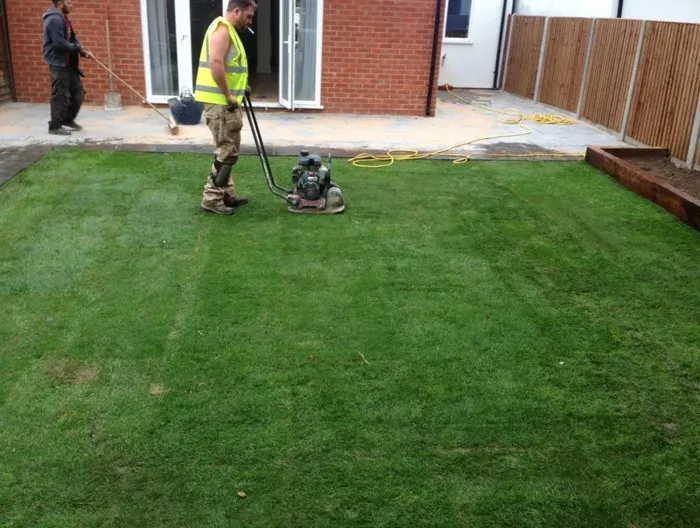
Firming newly laid turf evenly helps bind the roots directly into the prepared topsoil bed.
Need a New Lawn Laid Properly in Canterbury or Kent?
Whether you are replacing a worn-out lawn, sorting out poor drainage, or finishing off a full garden landscaping job, give our team a call for straight advice and a free, written quote.